
Simpler Recycling: England's New Consistent Collections Explained
Ending the postcode lottery: what the March 2026 rollout means for households and councils

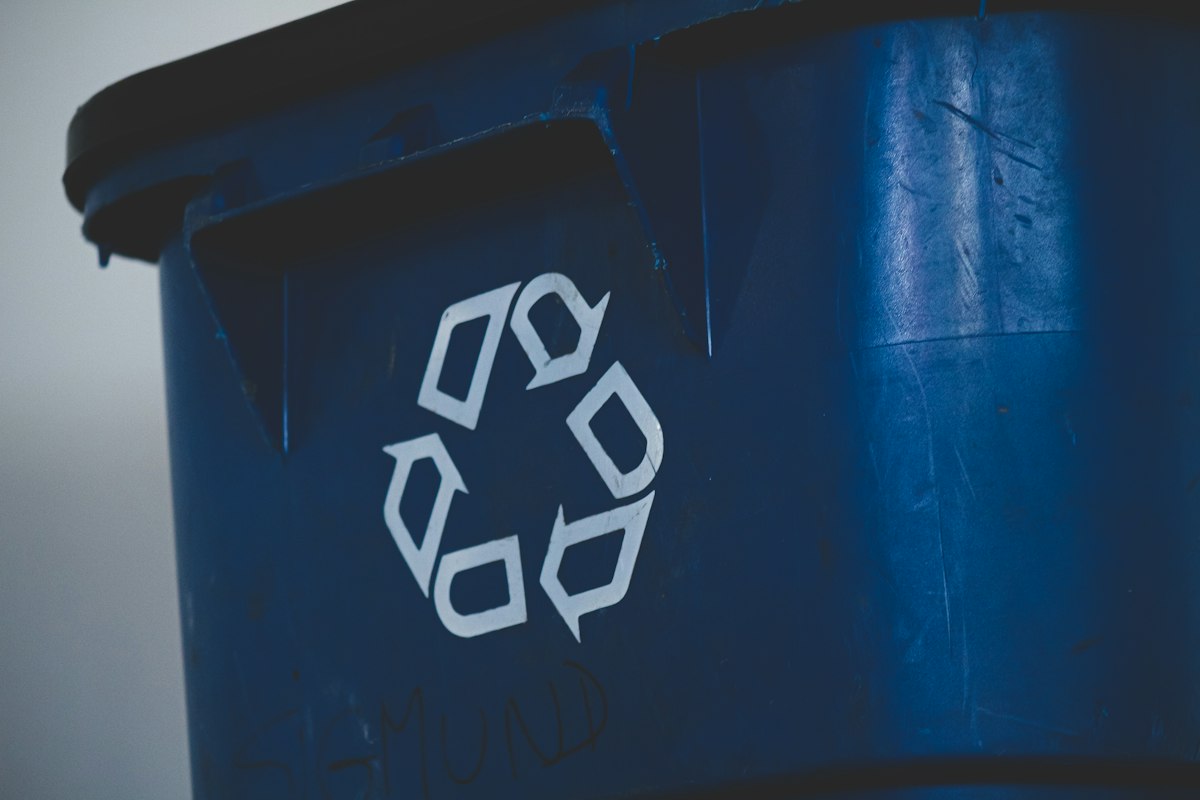
As of March 2026, all local authorities in England must collect a consistent set of recyclables: food waste, paper, glass, metal, and plastic. This ends the postcode lottery that has confused households for decades. What does this mean in practice?
The Problem Simpler Recycling Is Trying to Solve
For years, recycling in England has been a postcode lottery. Whether your local council collected glass kerbside, whether food waste was collected weekly or not at all, whether you needed one bin or four. All of this varied enormously depending on where you lived.
This inconsistency has had real consequences. It has confused households, reduced participation rates, and made it harder to build the consistent material streams that recycling infrastructure needs to function efficiently. It has also made it almost impossible to communicate a clear national message about what can and cannot be recycled.
What the New Rules Require
From 31 March 2026, all local authorities in England are required to collect a consistent set of dry recyclables: paper and card, glass, metal, and plastic. In addition, weekly food waste collections are now mandatory for most households.
This represents a significant operational change for many councils, particularly those that previously did not collect food waste or glass kerbside. The rollout has required investment in new vehicles, bins, and processing infrastructure, and has not been without its challenges.
The government has provided funding to support the transition, but many councils have reported that the timelines have been tight and that the costs of implementation have exceeded initial estimates.
Why Consistency Matters
The case for consistent collections goes beyond convenience. When the same materials are collected in the same way across the country, it becomes possible to build larger, more efficient processing facilities. It also makes it easier to develop markets for recovered materials, since buyers can rely on consistent quality and volume.
Food waste collection is particularly significant. Organic waste sent to landfill generates methane, a potent greenhouse gas. Collected separately, food waste can be processed through anaerobic digestion to generate biogas and digestate, a valuable soil improver. Mandatory weekly collections represent a meaningful step toward diverting this material from landfill.
The Limits of Simpler Recycling
Simpler Recycling is a welcome reform, but it is worth being clear about what it does and does not achieve. It improves the efficiency of end-of-life material management. It does not address the volume of waste being produced in the first place.
As we argue in our policy brief 'Why Recycling Is Not Enough', the UK's focus on recycling rates risks masking deeper systemic inefficiencies. Consistent collections are a necessary foundation, but they are not a substitute for the upstream design and production changes that a genuine circular economy requires.
Founder of Utter Rubbish, recognised by the Prime Minister's Points of Light Award, shortlisted for the Global Student Prize, and featured on BBC Breakfast, BBC Radio 1, and TEDx.
About This Article
Category
Circular EconomyAuthor
Dr. Elliott Lancaster MBE
Published
14 March 2026
Reading Time
4 min read
More in Circular Economy
Want to collaborate on research or policy work?
Get in Touch